
- Home
- The Future Without Passwords: How Passkeys and Biometrics Are Taking Over Digital Security
The Future Without Passwords: How Passkeys and Biometrics Are Taking Over Digital Security
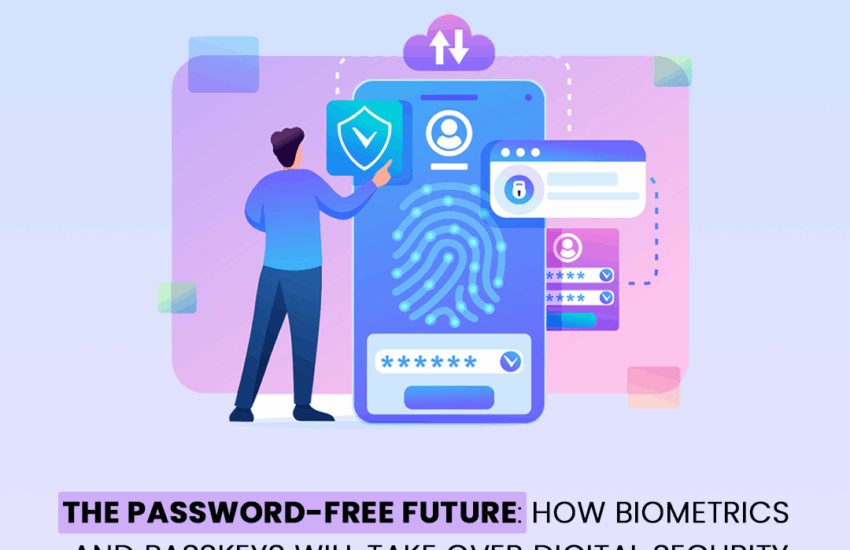
Over the years, the most common way to password authenticate online has involved the use of a password, and up until the present, they’ve been believed to be critical. However, in the modern era, it is actually passwords that represent among the most severe threats to online security and safety (due to the ease of forgotten and reused passwords and the ease with which hackable passwords are created).
The future of online security is a world free of passwords. Remembering passwords and logging into accounts will be a thing of the past. In its place will be available the use of passkeys, behavioral biometrics (fingerprints and facial recognition), and AI-based identity verification systems. The evolution of online security will be radical in the context of safety and ease of use. The online experience for the user will be seamless and more advanced, to say the least.
Rest of the report will detail and explain the following three major ways passwordless login is shaping the future.
1. Passkeys: The Next Big Step in Digital Identity Verification
Ai security solutions passkeys are a form of digital key that is stored on the user’s device. The owner is then able to use their biometrics (fingerprint and facial recognition) and device password to access their online accounts, either freely or programmatically, without using a password.
Passkeys are connected to a user’s account and cannot be guessed, hacked, or stolen, unlike passwords. Passkeys also work on any device, including users’ smartphones and laptops, and on any website. Password authentication is done in a matter of seconds in a click or tap in a way that is more secure than password usage. In authentication done with passkeys, the user’s identity is assured.
Main Points
- Passkeys are stored securely on your device, not on servers.
- They cannot be phished, guessed, or leaked in data hacks.
- Login becomes one tap—no typing, no forgetting, no hassle.
Google, Apple, and Microsoft are now allowing users to sign into their apps, including YouTube, Gmail, and WhatsApp, using only Face ID or fingerprint, as they now support passkeys.
2. Biometrics: The New Identity of the Digital World
Behavioral biometrics, such as fingerprint and facial recognition, iris scanning, and voice ID, are becoming the main form of user authentication. They depend on unique and immutable biological features that cannot be easily changed, guessed, or replicated. The advancement of sensors, as well as AI, makes the biometrics system faster and more accurate and nigh impossible to replicate.
Main Points:
- Biometrics allow real-time and highly accurate identity verification.
- Device stored data using secure regions, ensuring privacy.
- AI blocks fraud by detecting and mitigating attempts to spoof biometric data.
Example:
Apple’s Face ID is more secure than any password, as it relies on a 3D sensor and artificial intelligence engine system that can detect the user’s face with 1-in-a-million accuracy.
3. AI-Driven Security: Smarter Authentication Without User Effort
AI using behavior analysis becomes a silent guardian, confirming one’s identity through the automatic analysis of their typing patterns, device movement, and login habits without requiring any input, even passwords.
Password authentication becomes a barrier that makes hacking extremely difficult, as it depends on the presence of behavior patterns that are, by and large, unique to the individual.
Main Points:
- Ai security solutions confirm patterns such as the individual’s typing style, speed and manner of movement on the device, and their touch speed.
- If something appears to be out of the ordinary, the program automatically alerts the user or cuts off access.
Example:
To defend against breaches, banks use AI and passwordless login that are attempted from campaigns that have a different location or typing pattern or are from new devices so the user is protected from threats.
Conclusion
Digital security is applying zero-trust principles to eliminate the use of passwords. Instead of relying on memorized phrases to authenticate your access, your identity will act as the “password.”
Users will experience a seamless process with instant access to systems protected by a passkey, authentication, and AI systems that verify identity in real time.
Waplia Digital Solutions is one of the companies that have been advancing and supporting systems that are modern, flexible, secure, and passwordless login to meet the demands of the digital world.
