
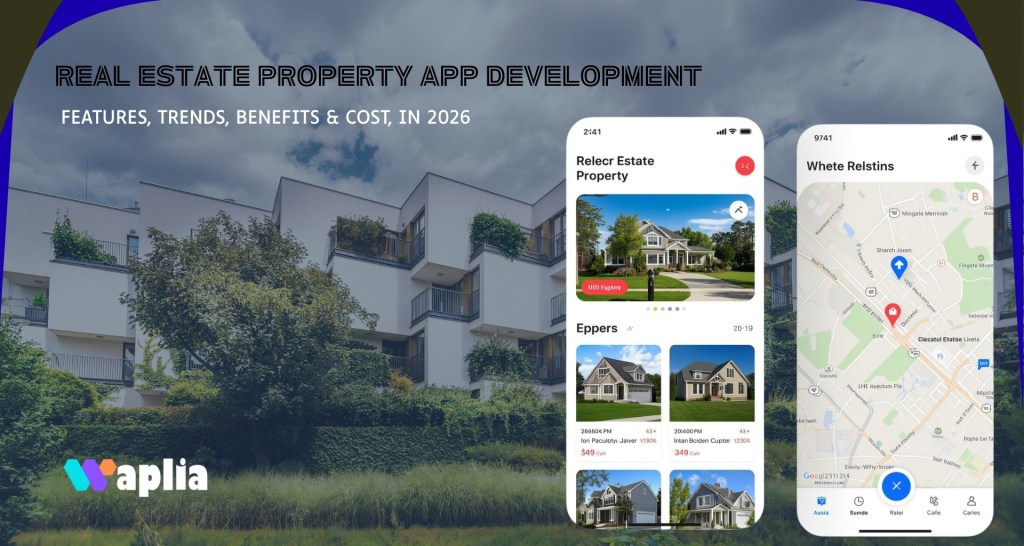
Are you stuck on the process of buying or renting your ideal home? This is where mobile real estate applications come in to help, removing lengthy and time-consuming methods to find the perfect home. Recently, the real estate app has grown in recognition throughout the USA. Many users are using the leading real estate software to purchase and sell properties they are interested in and save both time and money as well as anxiety with an easy procedure. These apps help you find rentals as well as properties within various communities. This blog is going to showcase the best real estate applications that are available in the USA and highlight their most important attributes, and how the real estate app industry is driving the digital revolution throughout these markets. Real estate apps that are top of the line and have features help make the buying and selling of properties simpler, speedier, and smarter. From searching for listings to connecting to agents, the apps are changing real estate transactions.
What Are Real Estate Applications?
Before we get into the details of properties that are available on mobile apps for sale and costs, let’s first understand what a real estate app is. There is no more an age where people go from one broker to another or from house to the next on the hunt for a property. All it takes is a click or swipe tap on a real estate app that is available on phones. So, shopping easily for the perfect property or house has become less of an obstacle. It’s simple and straightforward, right? Therefore, if you’re planning to get into the marketplace and increase the number of customers you serve, then building an app that is your own is a great concept. Making a mobile real estate application is a complex task that requires knowledge and expertise. Therefore, it is necessary to employ a mobile application creator to build a satisfying and exciting mobile application.
What Are The Market Stats For Real Estate Apps?
You can very well see that mobile technology has been the core of everything, and thereby developing mobile apps for real estate is not an exception. So here are the numbers by Grand View Research to see why there is supposed to be a rise for apps on property and also digital property transactions. As per the Future Market Report, the real property software and mobile apps market is projected to increase from USD 5.76 billion in 2025 to 13.26 billion in 2032. As a result, the growing mobile real estate apps are expected to generate the market to an 11.5 percent increase in annual revenue. The market is experiencing this growth due to the increasing demand from users for real estate search tools that include immediate data and information, and artificial intelligence-based systems with easy-to-use interfaces. These trends force businesses to choose the right real estate app developers who are able to help them compete in a fast-changing market.
- The market for real estate software is expected to grow to USD 7.2 billion, or an annual rate of 10.22 percent, between 2023 and 2028.
- Cloud-based segments were estimated at USD 4.76 billion back in the year 2018 and will likely increase slowly over the next forecast timeframe.
- In-depth information about the factors driving the expansion and forecasts between 2024 and 2028.
- North America, with 30 percent of market growth, had the highest market share of the market for software in real estate.
Types of Real Estate Apps
The mobile app for the real estate development process is a multifaceted one that creates a variety of application types that enable people to buy, rent, sell, and manage property through the development of strategic apps for mobile devices used by the real estate app development company.
1. Property Listing Apps
Property owners can search for properties on the application by utilizing different filters to display the properties available, which include photos of properties, data on pricing of properties, and geographic places.
2. Property Finder Apps
Customers of the platform are able to make advanced property searches using its property search tool based on maps using sophisticated filtering techniques to provide specific property matches.
3. Real Estate Agent Finder Apps
Create a real estate agent locator application to establish relationships between sellers and buyers that require certified agents. Review the profile of their agents and rating with direct messages to conclude the transaction.
4. Property Management Apps
The software allows landlords as well as property managers to handle the collection of rent, maintenance requirements, and communication with tenants, as well as document management with their efficient systems.
5. Rental & On-Demand Booking Apps
This platform lets users book properties they want to utilize for short and longer stays by using its online booking system that offers secure contracts as well as safe payment options.
6. Real Estate Investment Apps
The applications for investing provide customers with market data, as well as instruments for evaluating investment returns that include portfolio management tools using AI for real estate in order to boost market predictions.
7. Real Estate CRM Apps
The software allows agents to handle their leads, while it manages their follow-up duties and analyzes their sales efficiency to build relationships with customers through one platform.
Key Features of a Real Estate Property App
Successful development of a real estate app demands an integration of simple and sophisticated features. It enhances user experience and the efficiency of operations, and allows companies to compete with the best apps for real estate that are available on the marketplace.
Basic Real Estate App Features
1. User Registration & Profile Management
Real estate applications require an encrypted registration process, a profile creation, and dashboard functions for sellers, buyers, and agents to monitor their listings of properties and client needs.
2. Property Listings and Media Support
High-definition photos and videos, price information, and descriptions of properties help increase the interest of customers as well as provide the same level of service as the best real estate applications give.
3. Advanced Search & Filters
The growth of mobile apps for real estate needs smart filtering technology that lets users look for homes based on the specifics of their cost, location, size, and other amenities.
4. In-App Chat & Notifications
It provides users with the ability to communicate via a system of messaging that supports immediate communication, while also allowing push notifications that provide quick response times, which motivate users to stay longer in the app.
5. Map Integration & Location Tracking
Maps with GPS capabilities, in conjunction with the development of a real estate portal, give users improved search and the ability to navigate.
Advanced Real Estate App Features
1. AI-Based Property Recommendations
Real estate software currently used by businesses contains AI-based recommendation systems that assess users’ activities in relation to their preferred locations as well as previously located places.
2. Virtual Tours & AR/VR Integration
The development of a real estate app lets users evaluate property by taking virtual tours that aid users in making more informed decisions.
3. CRM & Lead Management Integration
Advanced platforms employ the business contact management system to track customer interactions using their lead management platforms and automate follow-up actions in order to improve the customer experience.
4. Multi-Platform & Enterprise Scalability
The business of real estate app development involves flexible systems that allow mobile and the web to work together as real estate firms expand their businesses.
5. Secure Payment & Documentation System
The companies need to employ real estate app developers for their requirements due to the fact that they have to set up secure payment systems and establish digital authentication of documents. Additionally, it allows payments to function with no interruption.
Benefits of Real Estate Property App Development
In the property deal company, you could greatly gain from developing a customized purchase and sale app for your property that offers impressive returns quickly. Your business itself can be extensive and do extensive listings, which are usually pretty attractive. Your business will be able to connect with the clients in the daytime around the globe or locally and have control over the content of the website. You will also be able to get instant alerts and messages so that you can take quick follow-up.
Keeping these things in mind, if one understands, making a real estate application will give you profit. Therefore, if you’re looking to build your company and establish yourself without having to go the conventional route or using expensive strategies (flyer advertising, ads, or cold calls), it is possible to gain from using an app for real estate. Utilizing professional, high-performing apps for real estate allows you to accomplish a range of tasks, such as managing your listing, keeping track of deals, displaying homes, or closing deals while at home or on the workplace couch. If you’re a realtor or construction company looking to move your business onto the Internet, you should think about these advantages prior to deciding on an app for real estate.
Advantages of Building a Custom Real Estate App
- High Customer Engagement and Conversion
- Greater coordination between the Developer and Broker
- Help your customers with geolocation
- Be in contact with your customers 24 hours a day, 7 days a week.
- Better Property Viewing Experience
- Clean Property Insights
There are many advantages that can provide the perfect real estate app development solutions. If you’re interested in helping your clients deal with problems with property, allow your app’s real estate creators to create a stunning and extremely rewarding application.
Real Estate App Development Cost in 2026
In general, the expense for developing real estate applications could be estimated between $8,000 and $30,000. The cost of this is dependent on the level of complexity of the app; the more complicated the application, the greater the price to create an app for real estate. Simple apps come with MVP capabilities, basic functionalities, and efficient development tools, as well as basic UI/UX. It reduces complexity and the price of building a real estate application. A high-level app comes with advanced functions, complicated integrations, and high-performance demands. This can increase the complexity as well as the costs of developing an application for real estate.
This is what we can learn from the real estate app development cost breakdown table for developing the real estate app solutions.
| App Type | Features Included | Estimated Cost (USD) |
| Basic Real Estate App | User registration & login, simple property listings, basic property search, and contact/lead form | $8,000 – $12,000 |
| Mid-Range Real Estate App | Advanced search filters, map-based property search, saved favorites, and push notifications | $12,000–$20,000 |
| Advanced Real Estate App | Agent/admin dashboard, in-app chat or messaging, virtual property tours, and analytics | $20,000–$30,000 |
Technology Stack for Real Estate App Development
The tech stack used for the app for property also affects the costs of developing an app for real estate. The app must deliver the best functionality and flexible operation and seamless cross-platform compatibility. This is the essential technology stack our specialists employ to develop real estate applications:
- Build real estate real-time mapping: MapBox, Google Maps APIs, MapKit
- The registration or sign-up procedure: Google sign-in, Facebook SDK
- GPS mapping: monitor your location and find information about nearby local places, such as restaurants and clubs.
- For notifications: Firebase, or Apple Push Notifications
- Location of the Core: Get details about the location of the retailer.
- CoreData: Restore the houses and other buildings.
- Automating the market: Dotloop
- Voicemail automated: Agent Legend
- Automatic examination: Spectora
- Digital Asset Management
- Automation of finance and accounting Xero
- CRM: Zoho CRM Analytics
- ERP: Netsuite, Microsoft Dynamics 365, SAP ERP
- Languages used for front-end development: HTML, css, PHP, js
- Platforms for syndication (pool in which multiple investors purchase the same property): ListHub, point2, the 365 connect, realtors
Real Estate App Development Process
When all the above is done, all you will need is a property app developer that understands your requirements and begins the building process accordingly. Make sure that your needs are clearly communicated and accepted by the design team and developers of real estate apps and the other technical staff. Meet with your developers for real estate apps, their method of development, and the timeline for turnaround. Making a customized rent-and-sell app will require your continuous input in order to allow developers to build an app for real estate that is in line with your company’s idea.
This is how programmers build an app for real estate:
1. Business Analysis & Requirement Gathering
The procedure begins with the business analysis, which includes obtaining details. The company that develops apps professionally produces applications to help customers assess the feasibility of their real estate business ideas while developing comprehensive schedules for projects.
2. UI/UX Design & Prototyping
Designers design wireframes and interactive prototypes in order to provide smooth navigation as well as engaging experiences for users in the real estate development app.
3. App Development & Platform Selection
Developers create the front-end as well as the back-end components of systems. Businesses typically employ Android application developers in order to develop apps that work across every Android platform while being accessible to a wider audience.
4. Testing & Quality Assurance
The customized real estate app development process involves thorough tests to detect flaws in software and confirm security standards and assure operational capability on a variety of hardware platforms.
5. Deployment & Ongoing Maintenance
This real estate development application requires continuous security updates, along with continuous development of innovative features as well as assessments of its efficiency. The process will commence from its first launch.
Real Estate App Market and Technological Trends in 2026
As technology advances, online real estate apps are becoming popular. The real estate industry is embracing the latest technology and trends in the market to expand and improve users’ continuous experience. The new technology stack can also affect the total costs of developing apps. We’ll discuss some of the latest technological trends our app developers for real estate think will alter the direction of the real estate market.
Artificial Intelligence
The apps for real estate on-demand as well as software are growing rapidly as well, and in keeping with the changing trend, artificial intelligence is no different. AI-driven smart real estate app development services have been a major player in this market. Artificial intelligence-based algorithms can automate a variety of customer service tasks and optimize pricing. They also help identify customer needs through analysis of their behavior as well as improve overall customer experience.
Immersive Technologies
We’ve all seen that AR/VR technology is changing the gaming industry, the health industry, and the real estate sector. The AR/VR market is predicted to reach around $80 billion in 2026, and a large portion of that will be the real estate industry. Customers can enjoy an immersive view of the house prior to purchasing it in the comforts of home. Users can see what the house looks like as well as what’s around it thanks to the latest technologies for immersive experience.
Internet Of Things
A different technology that is changing the face of real estate is IoT. Developers of real estate apps consider IoT as a key component of the Internet of Things as one of the technological innovations that are revolutionizing the market for everyone’s good. It enhances efficacy and the life for the customer. Since IoT advances in its development, the need for specific IoT app development and services is growing, which will ensure seamless integration of intelligent technologies in real estate-related solutions.
Big Data Analytics
Data analytics are the requirement for the moment in order to stay in front of your competition and be awe-inspiring to your clients. Through predictive analytics and data analytics, it is easy to get a better understanding of what the customer needs and can help them save time and effort in locating the best product.
Blockchain
Blockchains are smart, distributed ledgers with quick transactions, and so on. Blockchain technology has brought new elements to the market, including a variety of innovative elements and items to improve the reliability of the app and allow customers to be at the highest level.
Monetization Strategies for Real Estate App Development
The most successful real estate applications have made millions through innovative monetization strategies. If you can find the best method, an app that is cloned could become an income-generating machine. There are many ways to do so, such as lead generation, subscriptions and commission-based charges, and listing as well as advertising.
1. Commission-Based Model
The business model makes money through the charging of a fixed amount for transactions made through the app. Earnings from this model will depend on the value provided to customers. It promotes collaboration with realtors and creates confidence. The real estate transactions that are made through the app tend to be very high; therefore, there is an opportunity for high income.
2. Lead Generation
Another method of earning profit from the app is to make connections between serious buyers, sellers, and renters. This method works on a per-lead or on a monthly basis. It’s a performance-driven approach that is suitable for renters as well as buyers’ leads. When the number of users increases and leads are generated, the amount will naturally increase, which results in an extremely high return on investment.
3. Subscription Model
It’s among the most efficient monetization strategies for cloning apps. Customers pay a monthly, annual, or quarterly cost to use the paid features of the platform. This is a great model for services in real estate development that provide consistent best value over long periods of time. Contrary to models that require a one-time purchase which generate regular and predictable income streams
4. Listings & Ads Model
The model of listings and ads generates money because it increases the visibility of users. Sellers pay for the premium positioning of their advertisements so that they stand out within a highly competitive market. This improves the chance that they will be noticed by prospective renters or buyers. Additionally, it offers content sponsored by advertisers and also sells advertising space to companies.
5. Pay-To-List
Also known by the name of “listing fee,” the model charges its users to list their properties on the site. It’s one of the simplest and most efficient methods of earning money through your real estate platform. Pay-to-list is a way to appeal to professionals who have ongoing listing requirements. It is simple to manage and implement.
How Waplia Helps You with Real Estate App Development
By 2026, real property apps have advanced beyond simple property listings and have transformed into intelligent, comprehensive digital ecosystems. The various real estate apps have revolutionized the way people look for and evaluate, manage their finances, and interact with property, bringing increased transparency, efficiency, and personalized experience. If you’re a company seeking to build an app for real estate and want to get in touch with Waplia, an industry-leading firm for the development of apps in real estate. Keep an eye out for details regarding all of this.
Conclusion
Real estate apps are something property companies should build to be successful in an era of high competition. This whole process, from feature and process identification to budget estimation to stack selection, is a major piece of a puzzle that can define long-term success. The proper implementation of mobile app development requires a strategic approach to execution, which enhances the user experience and improves return on investment in both real estate startups and large businesses. The goals of your business will be achieved through the design of a sustainable real estate application development that requires you to collaborate with experts who are skilled. The real estate platform you choose to use will draw buyers and help agents as they earn a steady stream of income for your company by utilizing proper strategy, technological use, and creative solutions.
FAQs
Real property creation is the procedure that creates applications for the web or mobile that let users shop, search, buy, rent, or manage their properties on the internet. The apps usually include options like property listings and advanced search filters, mapping integration, and communication with agents, as well as virtual tours of properties.
The application development costs usually range between $8,000 and $30,000, dependent upon the level of complexity and features, the design and platforms (Android, iOS, or both), and integrations like payment gateways and CRM software.
An app that is successful in real estate must include key features like:
Registration of users and profiles
Properties with pictures as well as videos
Advanced search options and filters
Integration of GPS and Maps
Chat in-app with agents
Push notifications
Virtual tours, AR/VR, and VR features
Professional developers of real estate app solutions aid businesses in building robust and user-friendly applications that increase customer satisfaction and generate leads. They also make property management easier and improve overall sales within the increasingly competitive real estate market.
The time to develop is contingent on the degree of sophistication and complexity of the app. The simplest property listing application can be completed in about a month and a highly featured real estate marketplace app, which has advanced integrations, could require up to 4-6 months.
Modern real apps for development make use of technologies like
Frontend: Flutter, React Native, Swift, Kotlin
Backend: Node.js, Python, Laravel
Database: MySQL, MongoDB
Integrations include: Google Maps API, payment gateways, and CRM systems, as well as cloud-based services.
Common apps for real estate comprise
Apps for listing properties
Property searcher applications
Real estate agent finder apps
Apps for managing property
Booking apps for rental
Real estate investment apps
Real estate CRM apps
Real estate apps use several monetization strategies, including:
Commission for property transactions
Lead generation fees
Subscription plans are available to agents or agencies
Listings of properties that are paid
Marketing and property promotion featuring featured property
Employing an experienced real property app developer makes sure your app comes with security, robust architecture, features that can be scaled, and a user-friendly UI/UX interface, as well as the correct integrations to make your app compete with the best real estate app developers in the marketplace.
A reputable developer of real estate apps can provide complete services such as market research, design of UI/UX, development, testing, deployment, and ongoing maintenance to create an extremely efficient property application that’s customized to meet your specific business needs.