
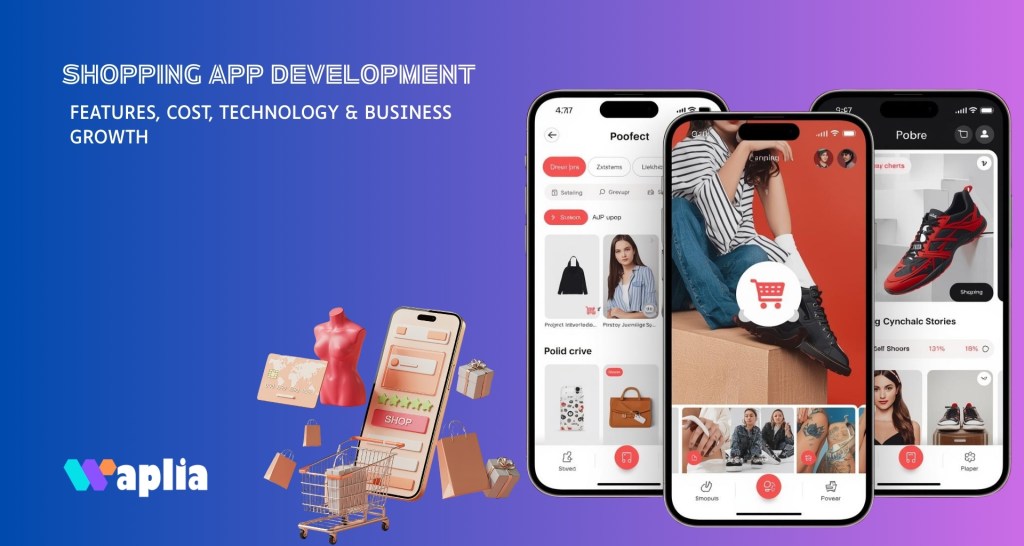
Mobile shopping is no longer a niche phenomenon. Mobile commerce volume will hit $710.4 billion by the end of 2025. According to the latest statistics, a staggering 91.9% of the time spent on smartphones is dedicated to mobile apps, with only 8.1% going to web browsers. Approximately 76% of adults have purchased items using their mobile phones.
To retailers and startups, these numbers shout out a clear message: a well-designed shopping app can be a growth driver. In this guide, our shopping app development company will discuss nuances and how to build a shopping app in 2026.
What Is a Shopping App?
Shopping apps integrate into e-commerce. This is making it possible for influencers and sellers to show off their products, engage with customers, and make immediate purchases. Contrary to conventional online shopping, the apps provide an immersive and interactive experience where customers can have questions answered, watch demos of products, and then buy without ever leaving the streaming video. Companies looking to capitalize on this trend are often looking to create a shopping application with safe payment gateways as well as friendly interfaces for users.
When they decide to build an application, companies using Waplia are able to harness the power of live interaction, boost the conversion rate of sales, and increase customer satisfaction by providing a more personal shopping experience. This method combines entertainment and commerce to create a flexible system for modern retail.
Why Should You Invest in Building a Shopping App?
Making the investment in an app for shopping is an excellent option when you are looking to combine online shopping and entertainment.
The reasons to consider this:
- Take advantage of a huge market: the need for online shopping is growing rapidly. When you choose to begin a shopping app development service, it is possible to reach millions of people who are ready to purchase items in a flash.
- Increase sales and increase engagement: Live chat features, such as instant purchase, as well as product demos, can help businesses create an app for shopping with live videos similar to Amazon Live that drives higher sales conversions compared to conventional websites.
- Make shopping a personal experience: By choosing to create a custom-designed shopping application, you are able to modify the application to match the style of your company, include distinctive features, and offer an experience for users that is seamless and ensures that customers return.
- Find the top business concepts: Live commerce can open up multiple opportunities, ranging from product demonstrations led by influencers to sales events that are geared towards niches, which makes it among the best live streaming ideas for business.
- Keep ahead of your competition: The early adoption of live video shopping technologies lets your company make a mark, interact directly with customers, and create a strong standing in the online marketplace.
The trend of live shopping shows no sign of decreasing, making the investment in a platform that is dedicated today position your company as a pioneer in the future of online shopping.
The launch of your own application increases customer satisfaction and opens up potential for growth in the long-term online retail market.
Types of Shopping Apps: Choosing the Right Model
The design of your application will depend on the business objectives you have set.
Single-Vendor Shopping App
Ideal for:
- Fashion labels
- Electronics retail stores
- D2C startups
This model concentrates on:
- Brand storytelling
- Programs to reward loyalty
- Promotions that are personalized
Multi-Vendor Marketplace App
Multiple sellers can operate on the same platform.
Some of the key characteristics are:
- Vendor registration
- Commission Management
- Seller dashboards
- Dispute resolution systems
This type of model is more sophisticated technology; however, it offers better scalability.
On-Demand Delivery App
It is used for grocery shopping and other everyday necessities. Requires:
- Updates on inventory in real-time
- Tracking of delivery partners
- Slot reservation systems
B2B Ecommerce App
The product is specifically designed for distributors and wholesalers. It includes:
- Management of bulk orders
- Customized pricing levels
- Corporate account dashboards
Each model has an impact on the infrastructure and the overall cost of developing a shopping app.
Key Features of a Shopping App
How do you build a successful shopping application? An effective retail shopping application is able to distinguish between functional essentials (the essential features that every consumer would like to see) and an intuitive user interface. These are the most popular elements that are often developed during the development of e-commerce apps.
1. User Registration & Profiles
It requires sign-up and login by phone or email or other options that are seamless, such as social login. Profiles for users allow clients to save personal details (addresses and preferences) as well as view the history of their orders. Login speed is streamlined and secure; authenticating (like 2-factor authentication) creates trust and helps make buying again effortless. The aim is to enable quick onboarding for new shoppers so they can begin shopping in a matter of moments.
2. Product Catalog and Search
The main feature of any online shopping app is its catalog. It’s a neat and organized list of items with good images, descriptions, and prices, as well as stock information. It is essential for users to be able to navigate categories and collections without difficulty. The search and filter function is essential.
3. Shopping Cart & Checkout Process
The shopping cart is where the purchased products are kept for purchasing the items and is kept in sync across devices and sessions in the event that a user has registered. A seamless checkout process is essential for minimizing the possibility of abandoning your cart. That means shoppers have to check their shopping and alter the amount before proceeding to the checkout process in as few steps as possible. Some of its most popular features include collecting shipping information, providing shipping options, and confirming your order’s summary prior to paying.
A more efficient checkout process (such as auto-filling of addresses or guest checkouts for first-time guests) can result in higher conversion rates. Unorganized checkouts can lead to drop-offs.
4. Multiple Payment Options
Customers want alternatives when it comes to the payment process:
- Credit/debit cards;
- Mobile payment (Apple Pay and Google Pay);
- PayPal;
- Buy Now Pay Later, etc.
Also, payments should be processed by secure payment gateways that use encryption for sensitive data. Making use of different currencies or local payment options can be crucial when dealing with customers from abroad.
One-tap payments and digital wallets have become a rage in 2026. Actually, more than 60% of all online transactions worldwide are done using mobile wallets. Making it easy for the user to make a single-click payment can make them more satisfied and decrease abandoned carts as well.
5. Order Tracking & Notifications
The ability to track orders allows customers to view their order’s past and present status with regard to delivery, processing, and delivery. Ideally, integrate with shipping providers to allow customers to monitor delivery status in the application itself.
In addition to tracking, you can use the app to alert users about important updates, e.g., “Your order shipped” or “Out for delivery today.” These are delivered through push notifications or app notifications and can improve your customer experience after purchase significantly.
6. Ratings and Reviews
A ratings and reviews page of products in the app helps build trust and builds community. Customers need to find out what other customers are thinking and write their own comments after the purchase. A simple star rating scale as well as reviews by reviewers can help new customers make buying choices (and they provide retailers with the feedback).
Include review sorting and filtering capabilities (e.g., latest, most recent, or top-rated) to make it easier for users. Reviews can be a great feedback loop.
Step-by-Step Guide to Retail Mobile App Development
Making a successful retail application will require a strategic approach and knowledge. This is a detailed plan for successful development.
Step 1: Define Clear Objectives
Before development begins, identify:
- Your main goal (sales expansion, brand recognition, operating effectiveness)
- Your target audience demographics
- Market gaps
- Unique selling proposition
If you are targeting urban young consumers or regionally specific buyers, the clarity of objectives determines the whole development approach.
Step 2: Conduct Research and Planning
Market research can help you better identify your competitors and the expectations of users.
Planned activities include:
- Choosing the best option (iOS, Android, or both)
- Deciding between native or cross-platform development
- The identification of must-have characteristics
- Create a realistic timeline.
- The process of establishing a budget for development
Knowing these factors early can help in reducing the overall development cost.
Step 3: Design and Prototyping
Design determines user perception.
This comprises:
- Wireframes are created
- User journey mapping
- Visual interface design
- Interactive prototypes
Prototypes enable businesses to collect feedback prior to launching full-scale development.
The design of UI/UX should focus on:
- Simple navigation
- Clean layout
- Minimalistic design
- Fast-loading screens
Step 4: Development Phase
Development can refer to:
- Frontend programming
- Setup of the Backend Server
- API integration
- Integration of payment gateways
- Implementation of security
The business must decide between:
Native Development
Apps that are separate are available for Android as well as iOS and are optimized for performance.
Hybrid Development
Frameworks for cross-platform applications such as Flutter and React Native. Selecting the appropriate strategy can affect the scalability of your development budget.
An experienced shopping app development company ensures the frontend as well as backend components work effortlessly.
Step 5: Testing and Quality Assurance
Tests guarantee:
- Accuracy of the function
- Optimization of performance
- Security of data
- Devices that are compatible
Tests of beta versions with selected customers provide invaluable insights prior to the launch.
Step 6: Launch and Deployment
Once the app has been approved, the app is then released in the appropriate app stores.
The marketing strategies that launch comprise:
- Email campaigns
- Social media marketing
- Collaborations between Influencers
- App install incentives
Step 7: Maintenance and Continuous Improvement
Maintenance after launch comprises:
- Fixes for bugs
- Monitoring performance
- Updates to feature updates
- Security patches
Integration of customer support into the application increases the credibility and confidence of users.
Understanding Shopping App Development Cost
The overall shopping app development cost is based upon a myriad of factors.
Key Cost Influencers
- App complexity
- Selecting the right platform
- Customization of UI/UX
- Integration of features
- Architecture of the Backend
- Security rules
- The location of the development team
Estimated Cost Range
| App Complexity | Estimated Cost | Timeline |
| Basic Retail App | $10,000–$25,000 | 2–3 months |
| Medium Complexity | $25,000 – $60,000 | 4–6 months |
| Advanced Marketplace | $60,000–$120,000 | 6–9 months |
| Enterprise Platform | $120,000+ | 9–12+ months |
The figures are based on scalability and customization requirements.
Technology Stack & Architecture Considerations
An experienced shopping app development company chooses technologies not just based on rapidness and target but also scalability.
Frontend Technologies
- Flutter
- React Native
- Swift
- Kotlin
Backend Technologies
- Node.js
- Django
- Laravel
Cloud Infrastructure
- AWS
- Google Cloud
- Azure
The right infrastructure avoids downtime when driving traffic to a sale event.
Monetization Strategies for Shopping Apps
The app for shopping can earn revenues through:
- Direct product sales
- Commissions from the vendors
- Placements of featured products
- Subscription models
- Memberships in loyalty programs
Planning for monetization should be integrated into the development planning process.
Importance of Hiring a Professional Development Partner
Retail businesses are adept at knowing the needs of customers and understanding the latest trends in markets. However, technical development requires specialized expertise.
Here are some of the services offered by a professional shopping app development company:
- Techniques and strategies
- Customized feature integration
- Implementation of security
- Scalable architecture
- Optimization of performance
- Long-term assistance
Rather than using off-the-shelf templates, seasoned devs created bespoke apps more aligned to company goals.
Benefits of Hiring a Professional Shopping App Developer
If you hire the ACE company for Shopping app development, it is sure of
- Strategic strategy and planning
- Efficient project management
- Coding standards of high-end quality
- Security conformity
- Scalable architecture
- Technical support for the long-term
An experienced team mitigates risks and brings to market faster.
Common Challenges in Shopping App Development
- Controlling high-traffic during the sale
- Protecting user data
- Improving performance
- Reducing cart abandonment
- Intention to keep long-term customers
The strategic planning process helps to overcome these challenges.
Conclusion
Shopping apps aren’t an option; they are necessary tools for growth in the world of modern commerce. Decisions like feature selection, best technology stack selection, app development cost analysis, and developing a scalable and sustainable structure—every decision impacts the long-term success of the business. Developing fixed shopping app development solutions promotes appropriate online marketplaces. When you employ planning, execution, and ongoing optimization, a shopping app becomes much more than an app for mobile. A critical key business asset around which customer loyalty, operational efficiency, and recurring revenues grow.
FAQs
An app for shopping is an app that lets users shop for items and add them to a cart, place secure transactions, and monitor orders through their mobile phones. Companies use the development of shopping app options to give customers a pleasant and customized shopping experience.
The investment in mobile apps will help companies increase the number of sales they make, increase customer satisfaction, and create trust with customers. Because the majority of users use mobile applications over sites and apps, partnering with a dependable shopping app development company can provide your business with a competitive advantage.
The price of development for a shopping app is contingent on the features, design as well as the platforms (Android, iOS, or both) and the complexity of the app. An app that is basic may cost between $10,000 and $25,000, while the most advanced apps for marketplaces can cost over the figure of $60,000.
The time to develop a product varies according to options and personalization. Simple apps can take a few months to develop, while the more complex marketplace with multiple vendors can take between 6 and 9 months, or even longer.
The key features are:
Registration of users and profiles
Catalogue of products with search and filtering
Cart shopping and checkout is easy
Payment options that are secure
Tracking orders
Reviews and ratings
An experienced developing service for shopping apps will ensure that these functions function smoothly.
The single-vendor app is a way to sell items of a particular brand or company. Multi-vendor apps allow multiple sellers to offer and sell products through one platform. Multi-vendor apps need more sophisticated tools for developing shopping apps.
The focus of your project is on the public. If you are looking to maximize your reach development for both platforms is a good idea. Numerous companies opt for cross-platform development to cut costs and increase time.
Shopping apps make use of secured payment gateways and SSL certifications and authenticated methods of security such as OTP and two-factor authentication in order to ensure the security of transactions and data.
Modern shopping app development solutions can include live streams, influential marketing demos of product features, and the option to buy in seconds, which can boost the number of customers who use your app and increase sales.
The team of professionals can provide customized design, flexible architecture, Secure payment integration, regular maintenance, and tech help. Your app will perform effectively and will support your long-term development.