
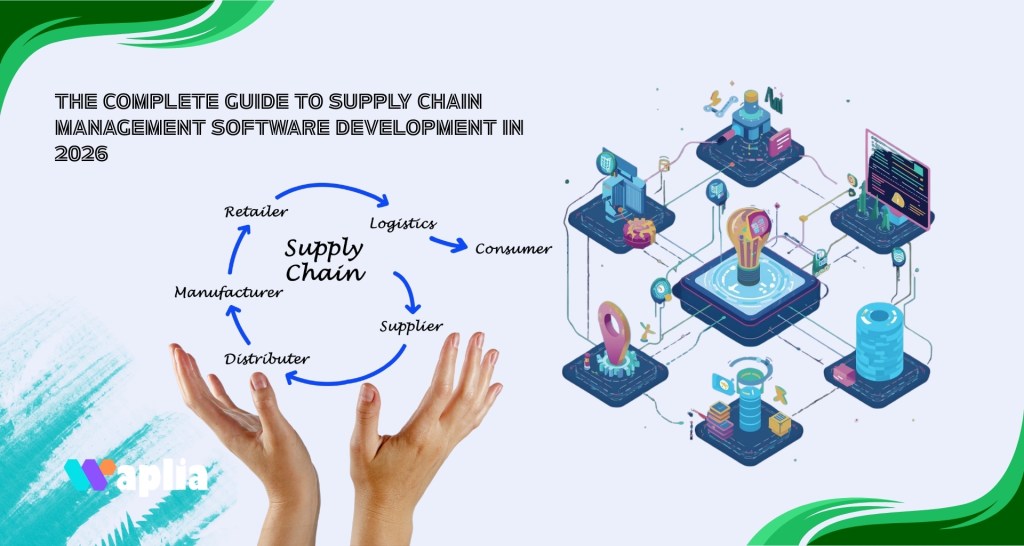
Controlling and planning the flow of goods and services from the suppliers to customers is the job of Supply Chain Management (SCM), which is a complicated system in today’s world economy. To be competitive in this area and stay ahead of the curve, you need to be constantly in tune with market trends. This blog provides a comprehensive overview of the costs of developing supply chain management software as well as different aspects. Software for managing supply chains is crucial for businesses to improve their supply chains, cut expenses, and increase customers’ satisfaction. Without it, firms could be unable to satisfy the demands of the market and remain at the top of their game.
It will discuss the key aspects and features that are included in SCM software. The software handles a wide range of tasks, including logistics management, inventory control, and transportation. Automation, in turn, is expected to boost profitability.
What Is Supply Chain Management?
Supply chain management (SCM) is the method of managing information as well as items and money regarding the specific product or supply chain management software development service, starting from the receipt of raw materials through to delivery. The process is carried out by an array of suppliers, which are used as chains that transfer the necessary resources required for the creation of new products to the manufacturers and later to facilitate interactions with the end-users. What makes the supply chain management system crucial? Every product that goes live in the marketplace requires collaboration with different suppliers for production, load dispatching, and other allocation.
Market Stats of Supply Chain Management
By 2026, the worldwide Supply Chain Management (SCM) software market will continue to grow quickly due to the rapid growth of digitization and the requirement for flexible supply chains. This market was estimated at around $23.2 billion as of 2025. It is predicted to expand substantially in the next few years.
- Market forecasts for the industry suggest that it may reach $54.8 billion in 2034. increasing with a compound annual growth rate (CAGR) around 10% from 2026 until 2034.
- The rise of supply chain management software is mostly driven by elements like the swift growth of e-commerce, automated technologies, and artificial intelligence, as well as blockchain integration and cloud-based platforms for supply chains. Businesses are more and more embracing SCM software in order to improve their transparency in real time, increase forecasting of demand, and improve logistics processes.
- In terms of region, North America remains the most important market. The United States is generating the highest revenues, mostly due to an increased use of supply chain technology that is digital throughout manufacturing, retail, and logistics.
In general, supply chain management software is an integral part of today’s corporate infrastructure. It allows businesses to streamline their operations, lower costs, and enhance the resilience of supply chains around the world.
Why Businesses Need Supply Chain Management Software
The SCM process assists managers and business owners in handling different tasks within the supply chain in a way that is efficient. Since businesses are increasingly adopting technological solutions for managing their supply chains, these methods are becoming increasingly popular across the globe. Based on recent market research, the global market for supply chain management was worth around 35 billion dollars in 2025. It could reach more than $90 billion by 2034. It is increasing steadily because of the growing demands of automation, AI, and cloud-based solutions for supply chains.
Then, what exactly is software for managing supply chains? It’s a computerized system that controls, manages, and regulates the movement of data, products, and money through the supply chain. Additionally, it allows companies to improve efficiency, track inventories on the move, and make smarter choices that improve efficiency all around.
Discuss other benefits of SCM. System development:
- More efficient workflow: Supply chain management solutions will allow you to automate your processes, decrease labor-intensive tasks, and reduce the bottlenecks. In particular, digital supply chain software can anticipate the availability of stock in advance, which allows employees to adjust the purchasing process and stop long periods of inactivity.
- Better cooperation: With customized SCM software it’s much easier to coordinate work across departments since operations and development are working in the same workflow. The data that is pulled from the manufacturing process and shared with the shipping staff at a rapid pace results in faster handoffs, less confusion, and faster reaction and response times.
- Improved customer experience: service precision and transparency have been increased by the modern SCM system. Digital foundations also mean that you have the ability to offer precise delivery times and tracking of orders, as well as service levels designed to please customers in the technological day and age.
- Smarter long-term growth: investments in supply chain software development will prepare your business for growth and long-term sustainability. Digital solutions that are customized to fit logistical operations that are ever-changing and competitive and respond to marketplace needs.
Types of Supply Chain Management Software
Understanding the different varieties of options for the development of software for supply chain management can assist you in selecting the best method to improve the supply chain processes. Companies often spend money on SCM development in accordance with the specific requirements of their business operations.
The most common SCM software includes
Product lifecycle management solution
The supply chain management system has to be able to manage the supply chain starting from the start. Intelligent software for managing the lifecycle of a product helps to ensure sustainability. Furthermore, when you integrate machine learning in monitoring and decision-making processes, the software will enable you to spot inefficiencies and modify strategies earlier. The ability to manage every phase of the lifecycle will create a stronger supply chain that is more competitive.
Software for managing inventory
A reliable inventory management program will help your business grow through the provision of products accessible at any moment. Expert supply chain and operations experts monitor the inventory levels carefully in order to reduce waste and avoid shortages. A well-organized supply chain lets businesses have an accurate demand forecast as well as a solid replenishment plan. High-quality management of stock results in more efficient warehouse flow and improved services to customers.
Supply chain risk management software application
An approach that is proactive for managing risks has become essential to keep supply chains robust in unstable markets. This is why you should make use of the specialized SCM systems for risk management to monitor the risks that could affect offsite inventory as well as the weaknesses of suppliers. Resilience is the solution to ensuring and maintaining income streams as well as the confidence of your clients.
We can help you create a custom solution for supply chain management to suit a specific SCM procedure and boost efficiency. In the case of the example, with the introduction of software for inventory management, warehouse staff can more accurately anticipate demand and plan replenishment in an efficient manner.
How Does Supply Chain Management Software Work?
The management of supply chain processes can be separated into three types, including information, product, and finance. Every supply chain management software development company can be classified into one of the three types. We’ll learn more information about the different categories.
- Product flow is the prompt production, storage, distribution, and removal of items across the entire supply chain. The quality assurance process is crucial to the process of flow.
- Information flow includes sending purchase orders as well as receiving sales orders. It also includes changing the status of delivery. This process is crucial as it serves as the base of the other processes.
- Financial flows cover managing inventory, paying invoicing, and credit-related terms, along with other financial processes.
Core Features of Supply Chain Management Software
The most important feature is the features element in any development plan. They affect the total price of developing the software to manage the supply chain. Are you curious about what these specific features of the software include? Here are the features that are required to be integrated into your application that have been granted approval by a supply chain management software development firm.
1. Purchase Management
This allows you to control the whole purchasing process to ensure the inventory. Furthermore, it facilitates automated execution and collaboration that reduces expenses and improves profitability.
2. Distribution Planning
This ensures that the goods arrive on time and that they are evenly distributed. This increases the inventory and lowers cost.
3. Material Management
This helps improve overall management of material through a faster flow of goods and optimizing each process.
4. Inventory Management
Warehouse managers are able to track and control inventory in order to attain more accurate inventory tracking, forecasting of demand, and reordering outcomes.
5. Warehouse Management
Diverse transport routes are utilized to facilitate the transportation and storage of products.
6. Sending and Receiving
It is a great method to control the movement of products by synchronizing the various transportation modes.
7. Return Management
This feature allows a significantly greater examination and handling of cash, resulting in regular results.
8. Supplier Relation Management
This improves the managerial ability to communicate with the suppliers. If you have a strategy that is more efficient and a better strategy, it is simpler for a company to meet its targets.
9. Forecasting
The manager can schedule production cycles with more anticipation by studying future demand.
10. Integrations with third-party providers
This permits the integration of services from third parties and is usually necessary for improving management operations.
11. Asset Tracking
This allows you to recognize serial numbers as well as barcodes so that assets can be easily identified. This is beneficial for managing warehouses.
12. Management and Fleet Tracking
This feature lets you keep tabs on your entire fleet’s movements with remarkable efficiency. This feature will assist in identifying supplies at each step.
13. Demand Management
This helps in controlling the demand while balancing the supply throughout each step. It also helps in making production plans without difficulty.
14. Credit & Price Control
This function can limit the price fluctuation by taking a variety of actions.
15. Invoicing and Sales Order
This can make delivery faster and more effective by ensuring perfect billing.
16. Inbuilt Chatting System
The system allows the entire crew to stay in constant communication with each other, which saves a ton of effort during operations in real time.
17. Sales Tax Management
It’s important to control tax obligations. This utility enables tracking the items and their locations.
18. Fund Flow Management
This lets you compare the different balances and records and then draw exact numbers, which will reveal what amount you’ll need.
19. Assigning User Roles
This improves the visibility of data and helps make it more valuable. Data holds greater worth.
20. Analytics & Reports
The system generates reports on total inventory by taking the history of orders and transaction reports into consideration. The reports will increase effectiveness and productivity in the whole process.
Benefits of Custom Supply Chain Software Development
There are many advantages to SCM, the software that is developed. Let us look at some advantages below. There are many benefits businesses can enjoy as they transition to the integration of supply chain management software development. Digitalizing your company will help employees to concentrate on their primary business while letting your SCM department run effectively. These factors illustrate the reasons why developing apps for supply chains is a worthwhile investment in the present.
Increase Output
The smart inventory management system enhances the communication, collaboration, and coordination with dealers, transport agencies, and vendors. The software instantly enhances a two-way communication flow, which organizes and simplifies the whole distribution process. This helps to ensure accurate output results and also creates an element of trust among users.
Improved Profit Margins
This is among the biggest benefits of the use of supply chain management software. This software assists in providing complete visibility into the supply chain as well as greater collaboration with vendors as well as other suppliers. It has an immediate beneficial effect on the productivity of business and, in turn, accounts for higher profits.
Improved Level of Collaboration
Communication and collaboration are vital to make the business process efficient. Through the use of properly designed SCM software, you will be able to monitor the entire inventory and keep regularly in contact with your vendors and suppliers. Furthermore, it is possible to interact with other departments within your company, leading to quicker and more effective decision-making reports, forecasts, and performance of operations in real time.
Reduction in Costs
If you have a solid supply chain management program implemented, you’ll be able to significantly reduce your daily expenses for your business. In conjunction with inventory management software, it will help you improve the efficiency of your inventory management system through finding raw materials and eliminating damage to resources. In addition, you’ll be able to know the requirements of your customers and keep a clear connection with suppliers and distributors.
No Delay in Processes
Uncommon mistakes like delays in the delivery process from retailers, delays in the logistics, and production delays such as logistical issues. The image of a company is at risk when it doesn’t meet customer expectations. Software for managing supply chains will ensure that every activity is coordinated so that the client is able to receive the product promptly.
Now there are lots of advantages associated with getting a supply chain software design company. Additionally, there is the need to establish a business plan that will manage the company’s operations.
Technologies Used in Supply Chain Software Development
We create robust and scalable platforms that utilize modern technology designed to handle high-speed data.
- Backend: Java, Node.js, Python (for AI/ML modules)
- Frontend: React, Angular, Vue.js for responsive dashboards
- Databases: PostgreSQL, MongoDB, TimeScaleDB (for IoT data)
- Cloud: AWS, Azure, Google Cloud for scalable infrastructure
- Integration: Apache Kafka, MuleSoft, REST/GraphQL APIs
Supply Chain Management Software Development Process
When you approach us for help in getting the software for managing your supply chain created, we adopt an approach of flexibility. We will keep you on the right track to ensure that you are able to make suggestions for improvements and additions whenever needed.
The development of reliable and robust supply chain management software requires six steps, which are like:
1. Strategy
The process begins with the creation of plans for development that outline the essential functions of the venture.
2. Planning & Analysis
Extensive market research and analysis is essential for identifying the preferences of audiences and gaining knowledge about your competitors.
3. Design
A wireframe that showcases all of the functions of the software is created and then presented to the user. This requires all the writing of code and coding to create an efficient software backend as well as a database.
4. Development
When the features have been decided and the layout is accepted from you, we begin the process of developing. We employ the latest techniques and programming languages in order to make sure that the software is able to stand the tests of testing over time.
5. Testing
The program is put through stringent testing to guarantee that it’s free of bugs.
6. Maintenance
Following deployment, the program is subject to periodic maintenance that includes software maintenance as well as service support with regular updates to meet customer expectations.
Find an ERP software design company to help you grasp the concept and help you stay engaged. We recognize that it’s crucial to keep you informed on the modifications we’ll make, and we ensure you do not get a little sluggish in the course of development.
To make sure you get maximum outcomes with our SCM software development business, there is a system of hierarchy that we adhere to. The structure of our team will allow users to comprehend our work and how we operate.
Cost of Supply Chain Management Software Development
The number of functions offered by supply chain software can affect the price for developing the software to manage the supply chain. An all-inclusive ERP solution is advised for larger companies with many departments. An ERP solution that is fully functional is more expensive. The supply chain software development cost is determined by the following elements:
- Users in the number
- Hourly software development costs
- Infrastructure
- Maintenance and support regularly
SCM software creation is cost-effective and created by the user in just a couple of moments. SCM software development prices are between $15000 and $40000. But, to find out how much it will cost you to create software for managing supply chains, you can hire an agency if you’re looking for the most efficient solution to the company’s processes.
Future Trends for Supply Chain Management Software
It is a fact that supply chains are constantly in need of improvement to be faster, more efficient, better-performing, and more responsive to ever-changing marketplace demands. Through more modern software for supply chains and tools, businesses can develop their customized software that is tailored to the needs of your company and reach higher levels of productivity.
AI & automation
The supply chain is complex and lengthy in general, and therefore experts seek out methods to increase productivity, like Artificial Intelligence (AI). In particular, a logistics system can use AI development tools to enhance shipping routes and delivery times in real time dependent on weather and traffic conditions, reducing fuel consumption and making sure that deliveries are on time. AI chatbots can also address questions from customers or queries for warehouses, increasing the speed of communications without the need for additional staff.
Internet of Things
Monitoring of supply chains in real-time and monitoring lie as essential components of IoT devices. Sensors communicate the status of the goods (e.g., temperature, for non-perishable goods), and GPS trackers transmit the live location of fleets. Smart shelves inside warehouses could trigger auto-reordering. This improves visibility as well as reduces waste. They also allow the logistics manager to respond quickly to changes or inefficiencies.
Blockchain-based solutions based on blockchain
Blockchain can bring transparency, traceability, and security to the complex supply chains. Businesses can track the source as well as the route taken by goods to determine if suppliers are adhering to agreements. Furthermore, blockchain can virtually eliminate any fraud or errors, which increase the price of international trade. As an example, a food company can monitor each batch of product that is transported from the farm up to the store shelves using blockchain for verification of security and the quality of the food.
Cloud systems
Cloud-based and cloud computing, SaaS SCM is based on cloud technology. A SaaS SCM solution provides instant access to data, expansion, and low-cost infrastructure. They also allow dispersed teams, like partners and even vendors, to order and inventory as well as collaborate from a single and central location. Additionally, you can enjoy lower maintenance and automatic updates as well as easy integration with cloud-based applications including ERPs, CRMs, and
Conclusion
The modern world has made the development of software for supply chain management emerge as the principal driving force behind operating excellence. With the help of intelligent SCM platforms as well as automated processes that are customized, companies will get rid of the constraints of manual processes as well as legacy debt. This results in an efficient supply chain that’s not just more efficient but also robust enough to stand up to the challenges of the coming years. If you’re looking for an organization that can provide you with an efficient solution, you should consider partnering with Waplia. This is achieved by directly integrating predictive models into your workflows. What are the costs for not optimizing your supply chain now?
FAQs
Software for managing supply chains is a platform for digital technology that assists businesses in managing the flow of supplies as well as data and financial transactions through the entire supply chain. This software allows businesses to automatize processes like managing inventory, tracking logistics, procuring, and warehouse operation, as well as supplier coordination, to increase efficiency and improve visibility.
Development of software for managing supply chains is the process of designing and building customized platforms to streamline supply chain operations. This includes analysis of requirements as well as system architecture planning, creation of integration with ERP or CRM systems, testing, deployment, and ongoing maintenance.
Flexible supply chain management solutions let businesses customize the features to fit their specific needs. Because they learn in real time, they can see what’s going on in supply lines better. This helps people make better choices, saves money, and makes things work better.
It takes a lot of money to make software for the order line. The prices change based on the system’s features, how well they work together, the team size, and the system itself. A simple answer could cost between $15,000 and $40,000. AI, IoT, and analytics could be part of enterprise-level solutions, but they could cost a lot more.
Modern supply chain management software comprises inventory management, warehouse management, supplier relationship administration, processing orders, scheduling of demand, forecasting, fleet tracking reports and analytics, asset tracking, and third-party integrations.
The timeline for development depends on the degree of complexity and sophistication of the system. The simplest supply chain solutions could require three to six months; a completely custom enterprise-level solution could take six to twelve months or greater.
Supply chain software creation is important for many fields, such as retail and manufacturing, e-commerce, cars, healthcare, logistics, and food delivery.
The newest supply chain software developers use technologies like AI or machine learning to help predict demand, the Internet of Things to track things in real time, blockchain to make sure data is clear, cloud platforms to make it easier to grow and scale, and APIs to link ERP and CRM software.
Supply chain management software improves processes by making information clear in real time, automating manual tasks, finding the best routes for logistics, checking inventory more accurately, and making it easier for distributors and sellers to work together.
When business owners are looking for the best supply chain management application development firm, they should think about things like the company’s experience in the industry and technological know-how, its ability to make scalable solutions, its ability to integrate with other systems, its post-deployment support, and its history of successfully completing supply chain projects.