
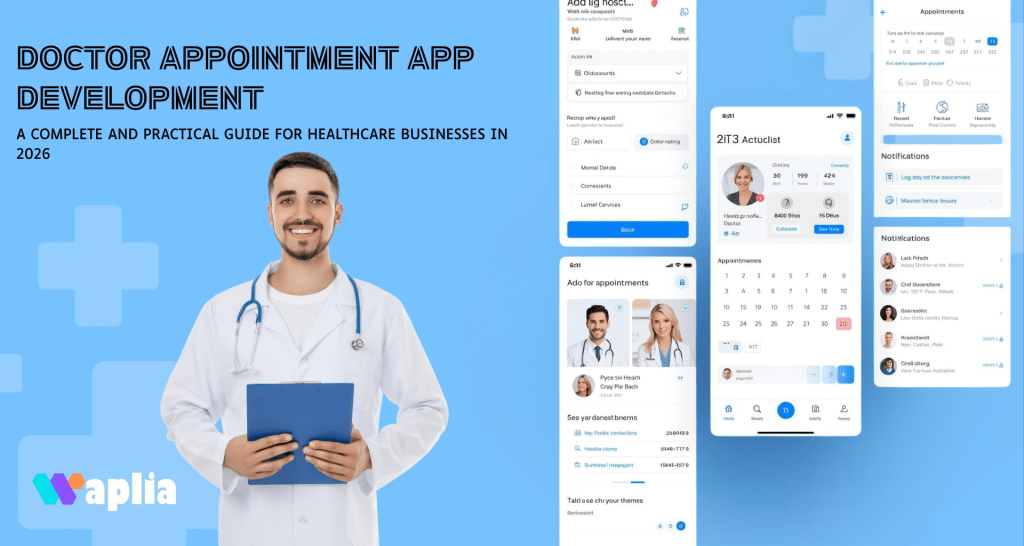
Health care is moving toward tools that are easy to use every day and don’t take long People today have to take care of their health, work, family, travel, and personal lives all at the same time As a result, they expect services that save them time and make things clearer. Clinics and hospitals also have to deal with more patients, fewer staff, and ongoing pressure to provide better care without slowing down operations. Because of this, digital tools for organizing and talking are slowly making their way into modern healthcare.
Appointment apps for the doctor can help you with many of these everyday issues in a quiet and useful way, People can use them to find doctors, see what times are open, schedule visits, get reminders, pay fees, and even go to consultations online. They also help doctors keep track of their daily tasks, make sure they don’t miss any appointments, handle their schedules, and keep their patient records in order, If these apps are well-made, they can be a reliable way for patients and healthcare workers to talk to each other.
This blog goes into great depth about how to make a doctor appointment app, with a clear structure, useful information, and tips. This guide is for businesses, healthcare startups, clinics, and entrepreneurs who want to know how to make a good doctor appointment app that can help them provide better services and grow in the long run. The guide was written for Waplia, a well-known business that makes secure, scalable healthcare apps that people can use in real life.
What Is a Doctor Appointment App and How Does It Work
A doctor appointment app is a digital tool that lets people make medical appointments without having to call or go to the clinic in person and It can be used on a phone or on the web and Modern apps have a lot of connected features that help with the whole patient journey, even though booking is their major function.
A normal flow starts when a patient opens the app and looks for a doctor by specialty, location, language, experience, or availability. In real time, the system shows you the times that are free The patient picks a time that works for them, makes the reservation, and is then notified. To make sure meetings are kept, reminders are sent out before the visit. Digital copies of medications, notes, and reports can be sent after the appointment.
Docs and clinic workers can see a dashboard on the provider side that shows daily schedules, patient information, and upcoming visits. Admin teams take care of payments, users, records, and the settings for the system. All of this takes place in a single, linked setting, which cuts down on the need for manual coordination.
A doctor appointment app basically takes the place of multiple calls, paper records, and follow-ups that need to be done by hand. Instead, it uses a centralized system that patients and providers can trust.
Why Doctor Appointment Apps Are Essential in Modern Healthcare
The need for health care is growing in both cities and semi-cities Every day, clinics have to deal with more patients, and those people want faster service and better communication Staff have to answer multiple calls, check paper plans, and confirm availability by hand, which slows down traditional booking methods. A doctor appointment app development company gets rid of these problems by automating routine chores. Slot view in real time stops double booking.
Auto-generated messages cut down on no-shows Digital records keep information from getting lost Billing takes less time when you pay online As time goes on, these small changes make things run more smoothly for everyone Getting people to use telemedicine is another important issue A lot of people now choose video consultations for follow-ups, minor symptoms, or getting a second opinion A modern company that makes doctor appointment apps generally adds video chat, secure file sharing, and video calls so that patients can get care from afar on the same platform.
Better planning is also good for people who work in healthcare. Clinics can better assign staff and cut down on wait times in reception areas when plans and patient flow are shown on a single dashboard. This makes the patients happier and boosts the clinic’s image.
Who Should Invest in Doctor Appointment App Development
The tools that help with making doctor appointments are useful for many types of healthcare facilities, not just big hospitals. Depending on how they work, different companies get different benefits.
Small Clinics and Independent Doctors
Small offices often don’t have a lot of staff. A lot of phone calls ruin consultations and make people less productive. Patients can make appointments on their own with an app, which frees up doctors to give better care. It also helps keep daily plans organized and cuts down on missed visits by sending reminders.
Multispecialty clinics
Clinics with a lot of doctors need to make sure that all of the areas work together well. A centralized booking system lets you see which doctor is available, keeps appointments from clashing, and helps receptionists keep track of the flow of patients. This cuts down on wait times and makes better use of resources.
Hospitals and Medical Centres
Many areas in large hospitals deal with a lot of patients. Appointment apps let you schedule meetings between multiple departments, handle wait times, and send reports. Also, by showing exact visit information, they help patients find their way around hospitals that are hard to understand.
Startups in healthcare
Digital health startups can quickly start offering services without having to spend a lot of money on infrastructure by using appointment systems They can try out new ways of providing care, like subscription consultations, remote tracking, or networks of specialists.
Doctor Platforms for Aggregators
Platforms that look like markets connect patients with a lot of experts in different places. Strong search filters, profile management, ratings, and quick booking are all things that these systems need. A trustworthy doctor appointment app development service guarantees steady performance even when there is a lot of traffic.
Types of Doctor Appointment Applications
For each type of healthcare plan, a different application structure is needed. Companies can choose the best method when they know about the main types.
Clinic Appointment Booking App
For a single clinic or small business, this type is made. A list of doctors, choosing a time slot, confirming the plan, and setting reminders are some of the most important features. The goal is to make it easy for people to use it right away.
Hospital Appointment Management App
Hospitals need to be able to do more. These apps have features like scheduling for multiple departments, managing joint resources, keeping track of patient lines, and producing administrative reports. Integration with hospital tools that are already in place may also be needed.
Telemedicine Appointment App
With telemedicine systems, care can be given from afar. Some of them are private chat, video consultations, digital prescriptions, and paying online. Follow-ups, mental health sessions, and managing long-term care can all be helped by these tools.
Doctor Marketplace App
Market platforms bring together many doctors and customers in one place. It’s important to have advanced search filters, reviews, ratings, and quick booking. A lot of the time, these apps come with commission management and statistics for administrators
Some doctors only do one type of medicine, like dermatology, dentistry, or physiotherapy. The app’s workflow is designed to work with recurring appointments, treatment plans, and sharing documents that are relevant to that field.
Essential Features of a Successful Doctor Appointment App
An app needs to be both useful and easy to use. Features should help people with real problems without being too much for them.
Features of the Patient App
Account and Getting In
- Simple to sign up by phone or email
- Safe login with forgot password recovery
- Taking care of personal information profiles
Doctor Discovery
- You can search by skill, location, language, and specialty.
- Filters for reviews and the type of consultation
- Clear profiles of doctors that list their skills
Management of Bookings
- See the real-time slot
- Quick confirmation of the booking
- Easy to stop and reschedule
- Help with waitlists for busy people
Engagement and Communication
- Reminders for appointments
- Notifications for follow-up
- When chatting with the clinic in the app
Tools for Convenience
- Online payments in many ways
- Being able to get medications and reports
- Video or chat teleconsultation from far away
What the Doctor App Does
Control of Profile and Availability
- Change the services and skills
- Mark out times and breaks for consultations
- Oversee more than one clinic spot
Set up Dashboard
- See your everyday and weekly plans
- Get patient information before the meeting
- Know about changes or delays before they happen.
Help with Medicines
- You can add notes and treatment plans.
- Make digital medicines
- Safely look over the patient’s information
Thoughts on Performance
- Follow the meeting count
- Check on your earnings and payments
- Keep an eye on patient comments
Features of the Admin Panel
Managing users and roles
- You can add or remove staff and doctors.
- Give rights based on the role
Watching over appointments
- Watch for reservations, cancellations, and changes to plans.
- Change the length and supply of slots
Management of money
- Keep track of bills and activities
- Take care of the marketplace models’ fees
Stats and Reporting
- Look at patient trends
- Look at peak times
- Track how the platform is being used
Controls for safety
- Control who can access what
- Keep the settings for compliance
- Look over activity logs
Step-by-Step Doctor Appointment App Development Process
A structured method is needed to make a healthcare app that works well.
Analysis of Needs
The first step is to understand the long-term goals, user tasks, and compliance needs in healthcare. This step sets the scope of the feature and stops changes that would cost a lot later.
Making UI and UX
Design concerns simplicity and accommodateness Interfaces should be user-friendly to users of diverse age groups, Adoption is enhanced by the use of large buttons, legible fonts and logical navigation.
Development and Integration
Frontend interfaces, backup services, databases, and APIs are created by engineers. Integration covers such as payment gateways, notification systems, video consultation tools and electronic health record connections where necessary.
Quality Assurance and Testing
Performance, usability and security testing at a large scale Load testing will make sure that the system is functional at peak times. Sensitive medical data is safeguarded through security testing.
Implementation and Continued Maintenance
Monitoring tools are tracked after launch to monitor the system health. Updates contain bug fixes and also include improvements. It has stability with continuous support because of the increased number of users.
A professional company for Doctor Appointment App Development thinks of the platform as a long-term product, not just a one-time send.
Technology Stack Used in Doctor Appointment App Development
Choices about technology have an impact on speed, scalability, and upkeep.
Technology for the front end
- React for systems that respond
- Angular for business apps with a clear layout
- Consider Vue for light performance
Developing mobile apps
- You can make cross-platform apps with Flutter and React Native.
- Swift for native speed on iOS
- Kotlin for apps that run on Android
Systems in the backend
- Node.js for services that can grow
- For safe logic, Python and Django
- Laravel to speed up work
Databases
- PostgreSQL for healthcare info that is structured
- MySQL to make deals safe
- MongoDB is a flexible way to store documents.
The cloud and the infrastructure
- For servers that can grow, choose AWS, Google Cloud, or Azure.
- Tools for container setup that work well
- CDN services to make viewing faster
Integrations
- APIs for video advice
- Ways to make payments
- Notification services through SMS and email
- Tools for analytics and reports
Security and Compliance in Healthcare Applications
It is very important to keep patient info safe. Doctor Appointment App Development needs to have safe authentication, encrypted storage, and role-based access. Certain records should only be seen by people who are allowed to.
Depending on the area, compliance rules like HIPAA or GDPR may apply. Audit logs record what happens on a machine. Risk is lower when security is checked regularly. Patients give healthcare workers private information, so it’s important to keep that information safe.
Cost Factors in Doctor Appointment App Development
The total amount spent depends on the size and type of the job.
Most Important Cost Factors
- Number of features and jobs for users
- You can use a mobile, computer, or both
- How hard the design is
- Adding third-party tools
- Traffic of users expected
Budget Optimization Tips
- Beginning with basic tools like scheduling and alerts
- In later stages, add more advanced parts.
- The cloud system should be scalable.
- Maintenance and help should be planned from the start.
Common Challenges and How to Avoid Them
Mistakes that could have been avoided can cause healthcare apps to fail.
Most Common Problems
- Putting too many tools in the app
- Navigation that is hard to understand for people
- Poor planning for security
- Not enough help after the launch
- Not well-integrated with current tools
Real-World Solutions
- First, focus on the most important user trips.
- Put samples through tests with real patients and staff.
- Keep the layout clear and easy to read.
- Set up regular updates
- Pick healthcare coders with experience
How Doctor Appointment Apps Improve Patient Experience
Patients gain from having clear schedules, being reminded at the right time, and having easy access to their medical records. Because meetings are planned, waiting times are cut down. With digital medications, you won’t lose any papers Teleconsultation saves time and effort when it comes to follow-ups.
Patients are happier when they think the process is easy and takes their time into account. When people have good experiences, they come back and tell others about the business.
How Clinics and Hospitals Gain Operational Efficiency
The people who work in healthcare spend less time on paperwork and organization. The staff can focus on taking care of patients instead of constantly managing the phones Peak hours, famous services, and resource gaps can all be seen in the data.
Trust and image go up when things are better organized. Over time, digital systems make it possible to add new services, like remote tracking or programs for preventive care.
Why Choose Waplia as Your Doctor Appointment App Development Company
Waplia makes healthcare apps that are based on how real clinical processes work The main focus is on making systems easy to use, safe, and scalable so they stay stable as the number of patients increases Custom scheduling systems, telemedicine integration, secure architecture, and long-term maintenance support are some of the company’s major strengths Before starting to build, the team works closely with healthcare workers to find out what their operational needs are Companies can lower their risks and make sure the end product works for both current operations and future growth by hiring an experienced doctor appointment mobile app development company.
Future Trends in Doctor Appointment App Development
New features are being added to healthcare technology all the time AI could help with smart assessment and figuring out what symptoms mean Predictive analytics can help you find the best ways to schedule your time Health data from wearable tech could be sent straight to appointment systems so that people are always being watched Even though there are new innovations, the main goal has not changed to make it easy, organized, and effective for both patients and providers to get health care.
Conclusion
Doctor appointment apps have become an essential part of modern healthcare delivery. They simplify booking, improve communication, reduce administrative workload, and support both in-person and virtual consultations. For clinics, hospitals, and healthcare startups, investing in a structured doctor appointment booking app development strategy improves efficiency and patient satisfaction Working with a trusted doctor appointment app development company like Waplia ensures the solution is secure, scalable, and aligned with real medical workflows. When technology is designed with clarity and purpose, it strengthens trust, improves daily operations, and supports better care for every patient who relies on the system.
FAQs
Doctor appointment app development means building an app that helps patients book doctor visits easily. People can search for doctors, see open times, book appointments, and get reminders. Clinics use these apps to keep schedules neat and communication clear.
More patients want fast and digital healthcare access. An appointment app saves staff time, reduces missed visits, and keeps patient flow smooth. In 2026, clinics without digital booking risk falling behind.
Small clinics, big hospitals, online healthcare startups, and doctor listing platforms need it most. These groups handle many bookings every day. A custom app helps them stay organized and responsive.
The basics include doctor search, time slot booking, reminders, and secure login. Online payments and video consultations are also important today. A good app stays simple and safe at the same time.
Patients can book anytime without waiting for phone calls. Reminders help them remember visits. Online consultations save travel time and effort, especially for follow-ups.
Doctors see clear schedules and face fewer interruptions. Clinics reduce no-shows and manage patient flow better. This leads to smoother days and happier patients.
Simple apps can take a few months to build. Bigger platforms with video and payments take longer. A skilled development company keeps the process steady and planned.
Cost depends on features, design level, and platform choice. Video calls, payments, and high traffic raise the budget. Starting small and scaling later helps control costs.
Yes, very important. These apps store personal health data. Strong security, secure login, and proper access control protect both patients and clinics.
Choose a company with healthcare experience and strong security skills. Check past projects and support services. The right team understands real clinic needs and long-term growth.